Welcome to part two of our series on research. Last month, we discussed primary sources. Today we dive into secondary sources.
To recap: to conduct thorough research, you need a mix of both primary and secondary sources. Editors consider the depth of your research when deciding whether to acquire your book. In fact, one of my editors, Carolyn Yoder at Calkins Creek, says she skims an author’s bibliography BEFORE she even invests time reading the manuscript.
Defining secondary sources
What’s a secondary source? You’ll find lots of definitions on the internet, but here is one I like: The University of Massachusetts Healey Library says secondary sources are “one step removed from primary sources, though they often quote or otherwise use primary sources. They can cover the same topic, but add a layer of interpretation and analysis.” Secondary sources include biographies and histories, scholarly or magazine articles written after the fact by people who are not eyewitnesses, and documentaries.
Why use secondary sources
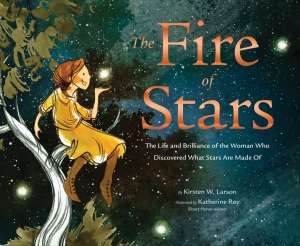
To write a great nonfiction book requires context, and context comes from secondary sources. Cecilia Payne’s groundbreaking discovery of what made the stars is more impressive when you realize how few women working in astronomy during her day. That’s information I get from secondary sources. Cecilia’s contributions and legacy are clear when I can understand what people knew about the stars at the time. Again, I need secondary sources for that information. (In fact, Dava Sobel’s Glass Universe was a wonderful source for all of this.)
Secondary sources also are critical for fact-checking primary sources. People, even eye-witnesses to history, can make mistakes in their accounts since memory can be fallible. Authors of secondary sources have sifted through and analyzed mountains of evidence from a variety of sources. The names, dates, and other facts they include are often more accurate than those found in primary sources. (Note: Ensure you are using credible secondary sources. Always check the author’s credentials. I also look at professional reviews for books I use in journals.)
Finally, secondary sources with great bibliographies can lead you to primary sources. They’re a shortcut for learning where a person’s papers are housed, for example, especially when archives are scattered across the country. That doesn’t mean you’ll rely on the bibliography exclusively, but they’ll give you a start.
An example
THE FIRE OF STARS ends with a series of questions:
If this is what stars are made of, how do they form? How do they create such enormous energy? Whose will the next discovery be?”
–THE FIRE OF STARS
To make those statements, I had to understand how Cecilia Payne-Gaposchkin’s research paved the way for future discoveries. And that required pulling secondary sources like astronomy websites and college textbooks in astronomy.
To see what kind of secondary sources authors use, look at the bibliographies of their books. I often begin research on a project with a book written for adults — a secondary source. While my sources change with every project, here are some I use frequently.
- Encyclopedia Britannica
- Gale General OneFile
- Smithsonian Magazine
- PBS for documentaries (Note: Sometimes you can check these out on DVD from your library.)
Before you pay to access any archive or database, check with your local library or local academic institution to see what they provide. Many offer free access for students or patrons.
Do you have a favorite secondary research resource? Let me know.